
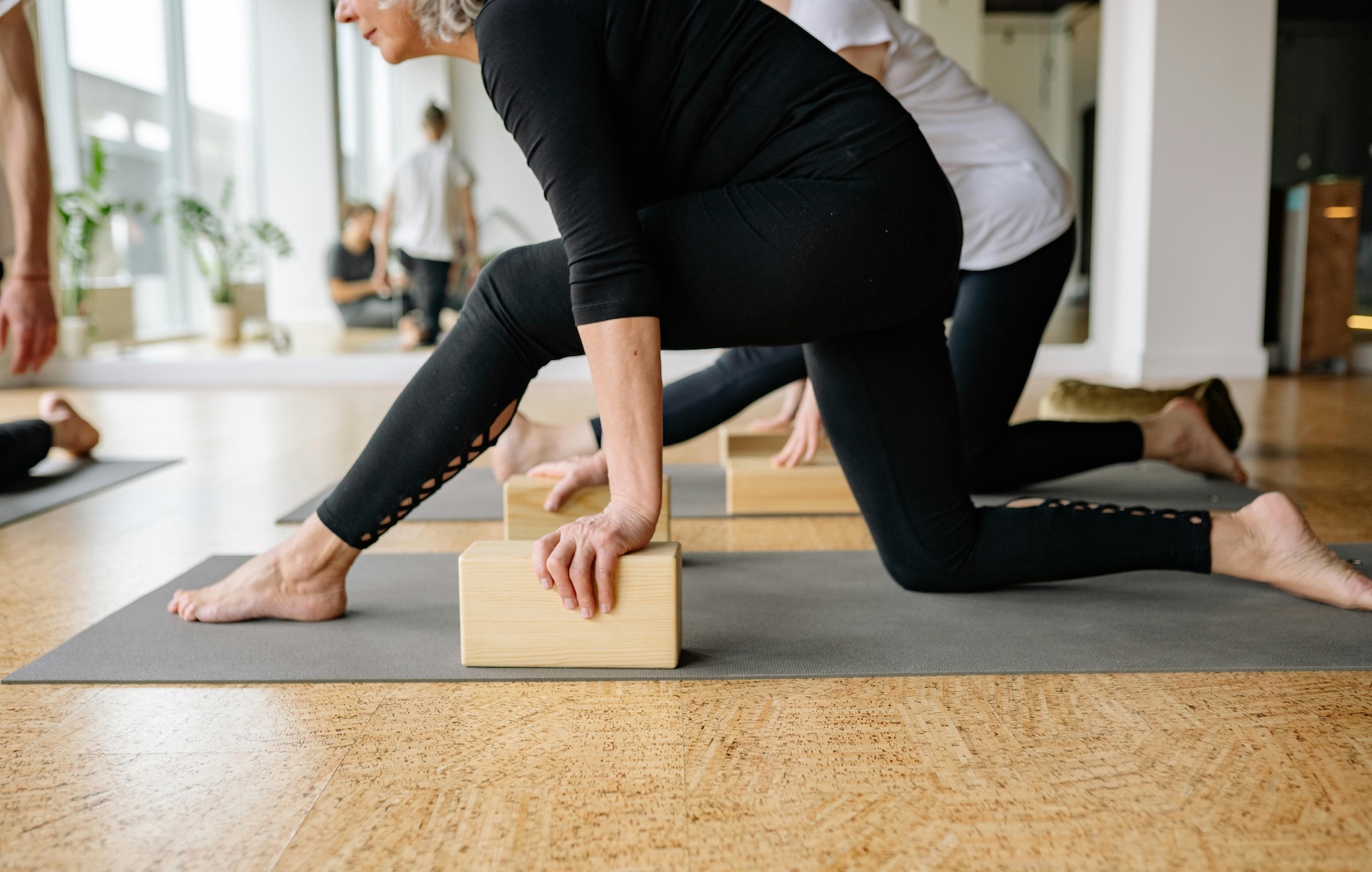
Teaching yoga would be a whole lot easier if our students neatly fit the mould of ‘beginner’, ‘intermediate’ and ‘advanced’ – but despite what classes may be labelled, humans are far more varied and nuanced than that. In reality, every yoga class is a mixed-level class, regardless of what the schedule states.
Even in a room full of experienced practitioners, you’ll find differences in anatomy and body structure, strength, mobility, injury history, nervous system state, and energy on the day.
A student may be ‘advanced’ in one area of their practice and brand new in another. Someone may have practised for years and still have super-tight hamstrings. Another might look comfortable in complex shapes while struggling internally.
 Moving Beyond the Idea of Levels
The concept of levels is usually centred on physical appearance of postures: depth of pose, balance, flexibility, or strength. But teaching at a so-called ‘level’ rarely accounts for the full human being in front of us.
A class labelled “beginner” might include:
- a physiotherapist or a dancer with no yoga experience
- a long-time practitioner returning after injury
- someone with anxiety who is new to group movement
A class labelled “intermediate” might include:
- hypermobile students that need more stability, not more range
- someone managing chronic pain
- teachers who are mentally exhausted
By teaching to a single imagined level, we risk overlooking the actual students in the room.
Inclusive teaching doesn’t mean watering things down. It’s about giving our students opportunities to explore and empowering them to make choices.
Teaching for Range, Not Hierarchy
One simple, effective shift we can make as teachers is to move away from hierarchical language — “easy” vs “hard”, “beginner” vs “advanced” — and toward descriptive options.
Instead of:
“If you want something harder, try this…”
We could say:
“You can stay here, or explore (xx option) if it feels good today.”
This small tweak removes value judgements and reinforces student agency.
When options are offered without hierarchy, students are more likely to choose what genuinely supports them, rather than pushing for what they think they should be doing or acting on the assumption that harder is always more beneficial.
Practical Ways to Make Every Class More Inclusive
-
Use Language That Invites Exploration
Cueing that invites sensing rather than achieving creates space for many levels.
For example:
- “Notice how this feels in your body”
- “You can explore…”
- “See what happens if…”
This type of language supports:
- Beginners who are learning to listen to their bodies
- Experienced students who benefit from nuance
- Students navigating sensitivity or injury
- ‘Type A’ students who are accustomed to always pushing themselves
It also allows each student’s practice to be different without needing to look different, and it encourages students to focus on how the practice feels, not what it looks like.
-
Teach Skills, Not Just Shapes
Within the landscape of an asana class, the postures themselves are only the surface of the practice.
When you teach underlying skills (physical or more subtle) such as:
- weight transfer
- joint organisation
- breath awareness
- nervous system regulation
students can engage meaningfully regardless of how the pose looks.
-
Normalise Variation
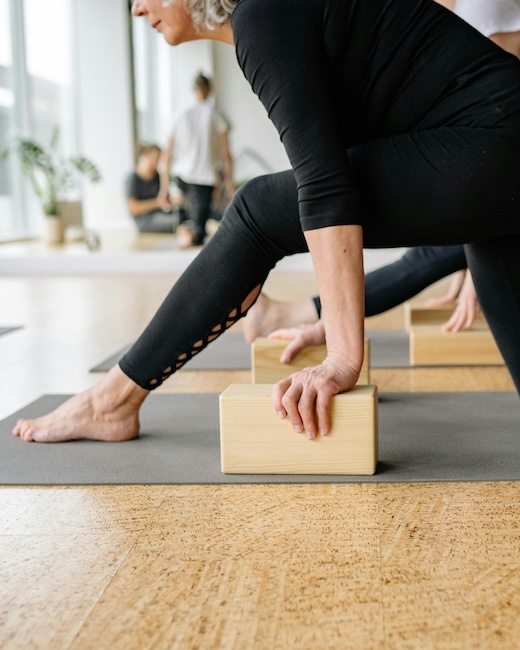
Variation doesn’t need to be explained or justified. The room becomes a more inclusive space when props, alternative shapes, or rest are presented as normal parts of practice (rather than “modifications” for those who can’t do the pose).
This benefits:
- students with injuries
- students with invisible conditions
- students having a low-capacity day
- students who are learning self-trust
-
Teach the Human First
At the heart of inclusive teaching is remembering that you’re not teaching poses; you’re teaching people.
People who live full lives that we don’t see; who change day to day; and may benefit from something different to what you planned (or what worked for them last week).
When we prioritise connection, our teaching becomes more responsive and supportive.
Inclusion Is a Teaching Skill
Contrary to popular belief, memorising endless variations isn’t the single most important factor in teaching mixed-level yoga classes. Inclusion comes from presence, thoughtful language, and – above all – having the confidence to trust your students.
When we teach with this mindset, every class, regardless of what it’s labelled, becomes a space where more people feel welcome and supported.



Leave A Comment